
Rural Communities Praise Impact Of Solar Power
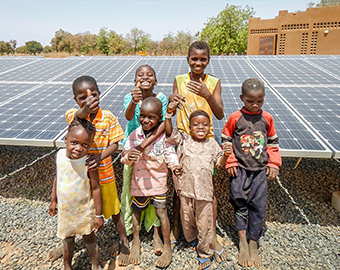
Communities in Akwanga West Area Administrative Council of Nasarawa State have expressed satisfaction with the presence of solar power in their communities, saying it has improved their lives and changed the way they conduct business.
The residents spoke when NBS News visited the communities to assess the level of consumption and compare their billing system with that of hydroelectric power supplied to urban centres.
For many residents of Anjida, Koko and Ninkebi communities, life once meant living in darkness, with only a few households relying on generators for electricity.
But the story is now different. Homes are lit, shops remain open at night, and children can study under bright lights, following the installation of solar power systems in the communities.
Baka Mbucho and Akayi Ombugadu, residents of Anjida Sarki, explained that solar power supply has reduced the hardship faced by people in rural areas.
When asked about consumption and payment, residents said the Pay-As-You-Go system is transparent and fair compared to hydroelectric billing in towns like Akwanga, Nasarawa Eggon and Wamba.
According to them, in Anjida, Koko and Ninkebi, residents buy energy tokens through their phones or POS agents and pay based on what they consume, between N500 and N800 daily, depending on usage.
Also commenting on the importance of solar power, the Secretary to Chun Ngah Palace, Mr Solomon Joshua, said the solar power company visited the palace before embarking on the installation of solar power in the communities with the consent of stakeholders.
He said that, compared to urban areas relying on hydroelectric power from the national grid, where residents complain of unstable supply, estimated billing and long blackouts, residents of Anjida say their solar system gives them steady power for an average of 20 to 24 hours daily.
The solar mini-grid in Anjida, operated by a Husk Power System in partnership with the Rural Electrification Agency and the Nasarawa State Government, powers homes, a health centre and small businesses.
Stakeholders say the success in Anjida shows that solar power is a viable solution for rural electrification in Nasarawa State.